NorthCape4000: why the BMC Roadmachine—not aero or gravel
Tom · 08.01.2026
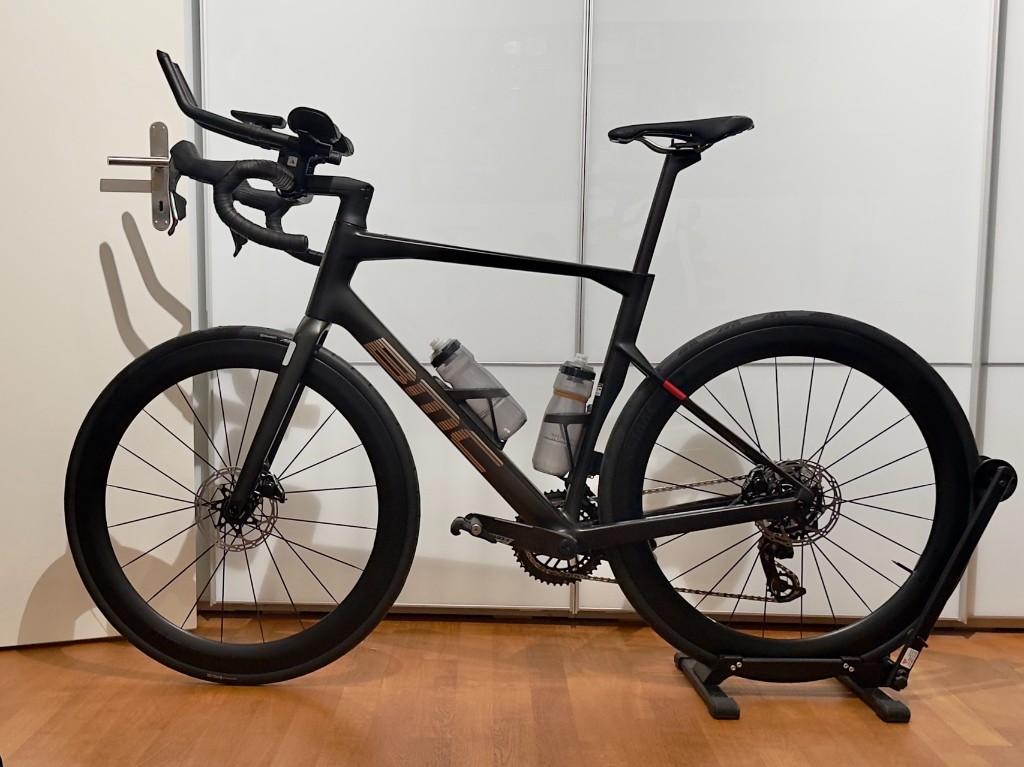
Quick frame: NorthCape4000 2026, my line from Berlin toward the North Cape—officially an adventure, not a race (northcape4000.com). Personally I still want to ride efficiently (self benchmark); many on the route do something similar—that is field reality, not the event label. This piece is about bike choice and cockpit; bags, power, and navigation stay in the setup overview.
Two bikes in the garage—and no clean winner
After I committed, I first asked whether one of my two current bikes could do the job: a very sharp BMC aero road bike I use for things like Alpenbrevet, or my Open WIDE gravel rig, which carried us around Iceland. Both are excellent—neither concept convinced me fully for this mix of distance, mostly asphalt, and day-to-day handling.
Requirements before gut feel
I structured what the route and my body need, then cross-checked with years of long expedition miles. Nerd alert: AI-assisted “deep research” helped surface gaps and comparison axes faster; the call still sits with me and with what I have actually ridden.
Roadmachine vs Open UP—what was left standing
In the end two bases remained: a new Open UP and the BMC Roadmachine. Open builds are fantastic anyway; I had already run a Roadmachine and been very happy on long days. For NC4K I chose the Roadmachine: fast enough, very comfortable—the balance I want for 10 to 16 hours on the bike per day.
Storage inside the frame
A major factor in picking the Roadmachine was integrated storage in the frame: a slim, removable pouch for tools and spares—tube, Dynaplugs (for tubeless fixes), a chain quick link, and the rest of the minimal kit. I added a second pouch of the same type, so the whole downtube works as extra capacity. On a ride this long, that really matters: less has to live strapped on the bike (bars, saddle, rack).
Frame bag and bottles (size 56)
For NC4K I run an Apidura Expedition Frame Tall (5 L) on the size 56 Roadmachine—fit and weights in bags: mix, volume, aero. With a frame bag in the triangle, downtube bottles must come out sideways; the stock BMC cages do not work for that. BMC sells a Downtube Storage Cover Roadmachine—a downtube cover that takes standard bottle cages. I fitted height-adjustable Blackburn cages: one with side release to the left, one to the right, so I pull both bottles the same way once everything is mounted.
Drivetrain: SRAM Force AXS over Di2
The build is SRAM Force AXS. I still love Shimano Di2 for most of my riding—here small removable batteries win: park the bike somewhere, charge the packs, or swap a spare without drama. For this logistics pattern, that edges Di2 for me.
Fit: Selle Italia ID Match
I have a Selle Italia ID Match bike fit—the Roadmachine went to the millimetre off those numbers. On this kind of distance, geometry plus clean data is not vanity.
Tyres: 32 mm Continental GP5000 TLR, tubeless
I run 32 mm Continental GP5000 TLR tubeless and use fairly low pressure for the best trade-off of comfort and speed. On long days that matters more than a few millimetres on a spec sheet.
On NC4K, the vast majority of the route is asphalt—sometimes in rough shape; 32 mm and tubeless are my answer to that. Even so, on this course I am happier on the road bike than I would be on the gravel setup; the new Open UP can wait a little longer ;-)
Cockpit
Profile Design tri extensions
To unload my back I fitted Profile Design triathlon extensions. I dialled the position on a Wahoo KICKR Bike—set up from the same ID Match data—because I had never ridden clip-ons before. Verdict: on long distance, worth its weight for me. On a test loop around Lake Maggiore I rode about 165 km non-stop and, at the same steady endurance pace, needed roughly one hour less than a year earlier on the aero road bike—same intent, different frame and contact points.
My SRAM Wireless Blips for shifting from the aero position sit at the ends of the extensions, in high-quality 3D-printed housings from LEAP Components in the Netherlands—they fit the Profile Design setup cleanly in both form and function. For power (including CR2032) and charging, see power, lights & energy budget.
Skipping a modern one-piece bar–stem
I rate integrated one-piece cockpits highly on my aero road bike—there they make sense. For the Roadmachine on NC4K I chose deliberately to stay with a classic stem-and-bar setup: early on I did not yet know how I would get home from the North Cape, and a conventional bar is simply easier to pack and move than a rigid one-piece unit. The more flexible “old” layout fits an open-ended return. This bike will likely see more long-distance adventures too—so I am keeping it this way, even though I will still love the one-piece setup on the aero machine.
That is the core; power, lights, and nav tie in via the setup article and the head unit comparison.
Many thanks for the great support—with the Roadmachine to Stefan and Sebastian at Radsport Thalmann in Schenkon, and to Andy at OPEN Cycle in Basel for the Open.